Introduction
Funeral monuments are far more than simple gravestones: they reflect how a society honors its deceased, preserves their memory, and expresses its beliefs. In Europe and America, these monuments tell different stories, shaped by distinct traditions, religions, and cultural sensibilities. Let’s explore these two perspectives on remembrance, where art, history, and emotion converge.
1. Europe: Between Tradition and Symbolism
Monuments Steeped in History
In Europe, cemeteries often resemble open-air museums. Tombs, sometimes centuries old, feature detailed sculptures, poetic epitaphs, and religious or Masonic symbols.
The materials used—marble, granite, limestone—are chosen for their durability, reflecting a desire to preserve memory across generations.
A Symbolic Language
European monuments are rich in symbols:
The Cross (Christianity)
The Veiled Urn (death as a passage)
Angels (protection and elevation of the soul)
Joined Hands (prayer or family unity)
These elements are not decorative; they tell the story of the deceased, their beliefs, or social status.
Cemeteries as Places of Reflection
European cemeteries are often designed as peaceful gardens, inviting contemplation. Tree-lined paths, chapels, and family mausoleums enhance the sense of serenity and respect.
2. America: Modernity and Personalization
Cleaner and More Personalized Monuments
In the United States and North America, funeral monuments are often simpler, featuring bronze plaques or polished granite.
The emphasis is on personalization: engraved photos, intimate messages, or even QR codes linking to online memorial pages.
This approach reflects a society that values individuality and personal expression.
Cemeteries as Living Spaces
Unlike in Europe, American cemeteries are sometimes designed like parks, with well-maintained lawns and benches. Some even offer “natural cemeteries”, where graves are marked by trees or unworked stones, in harmony with nature.
A More Optimistic Approach to Death
Inscriptions on American monuments are often positive, with phrases like “Forever in our hearts” or “Celebrating a life well lived.”
This reflects a culture in which death is seen as a stage in life, with an emphasis on celebrating life rather than mourning it.
3. Similarities and Trends
The Influence of Globalization
With globalization, funeral traditions are evolving. In Europe, monuments are becoming more personalized, while in America, some adopt traditional European symbols. Cemeteries are increasingly cultural melting pots, where each family can choose how to honor their loved ones.
Environmental Awareness: A Shared Concern
Across the Atlantic, green cemeteries are gaining popularity. Monuments are designed to be more environmentally friendly, using recyclable materials or natural burials.
Conclusion
Whether in Europe or America, funeral monuments reflect our relationship with death, memory, and the beyond.
In Europe, the focus is on tradition, symbolism, and permanence, while in America, personalization and the celebration of life take precedence.
These differences remind us that, despite cultural diversity, the need to remember and honor those who have passed is universal.

 English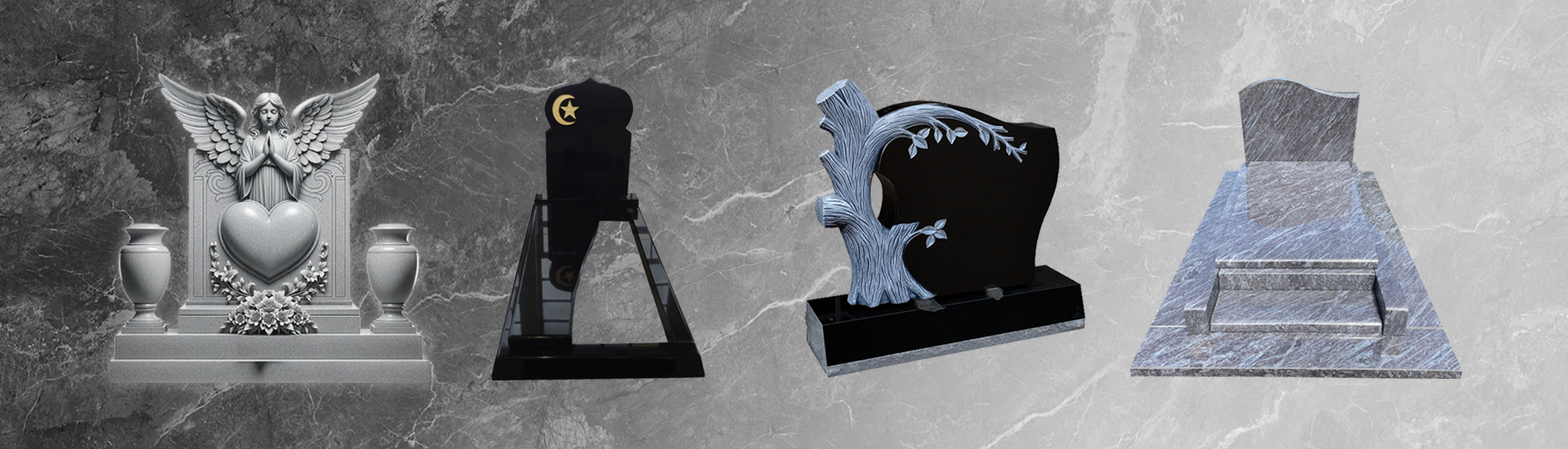







 Your current location: